

What the school is doing.
Notices go out here first: which intensive opens next, what was read in the ones before it, and how the zāwiyah is coming along.


Fatwā on Looking at Non-Maḥram Women During Conversation
Is it permissible for a man to look at a non-maḥram woman while communicating with her, provided that there is no fear of fitnah?
Read the article →
A Discipline Counted to Death: Formalism and the Crisis of Contemporary Hadith Studies
A considerable portion of what now passes for academic research in uṣūl al-ḥadīth at al-Azhar and comparable institutions consists of administering inherited classifications. Hadiths are collected, asānīd are placed into boxes, judgements are counted, and the resulting totals are presented with the grave satisfaction of a solved equation. The work may be long and painstaking. It is frequently intellectually slight.
Read the article →
Beyond Arithmetic: On the Limits of Quantitative Preference in Hadith Evaluation
In his concise and influential al-Mūqiẓah fī ʿIlm Muṣṭalaḥ al-Ḥadīth, al-Dhahabī discusses the case of a reliable narrator whose report conflicts with that of several other reliable narrators. He writes, in substance, that when a single established transmitter (thabt) relates a report in one form, while a number of other established transmitters (athbāt) contradict him, consideration should ordinarily be given to what the trustworthy narrators collectively agree upon. A single narrator may err, and numerical opposition may therefore indicate where the mistake lies.
Read the article →
Beyond Formalism: Context and the Criticism of Hadith Narrators
The history of hadith criticism is also a history of method. The discipline did not emerge fully formed, nor did its technical vocabulary develop independently of the juristic and intellectual environments in which hadith scholars worked. Its categories were gradually articulated, refined, contested, and eventually systematised. That systematisation gave hadith criticism much of its precision and durability. Yet it also raises a historical question that deserves greater attention: what happens when the methodological language of one school becomes so influential that it begins to appear indistinguishable from the discipline itself?
Read the article →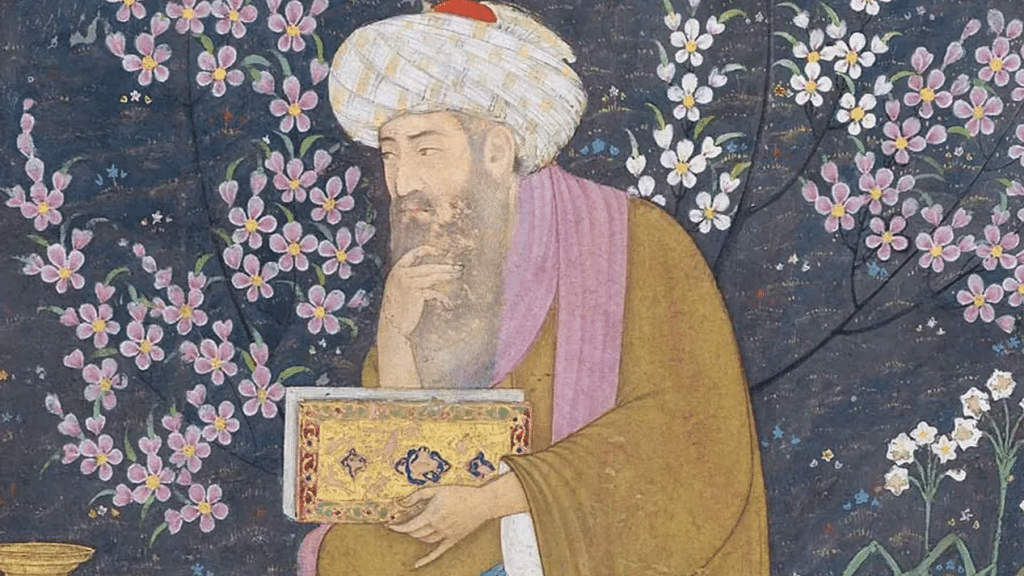
Hermetic Disciplines: On Entering the Closed Worlds of Scholarship
There are disciplines one can advertise by stating what they contain. There are others for which this is almost impossible.
Read the article →
The fourth winter intensive
West Cairo again, 6 to 16 January 2027, with Shaykh Yūsuf b. Ṣādiq al-Ḥanbalī: six hours of lessons and two hours of reading a day. The fee is £549 excluding flights, and places are few, so interest is registered in advance.
Register interest →
Building the zāwiyah
A room to sit in, a shelf to read from, and a teacher present in it. Where the work stands and what is still needed.
Follow the work →
The third winter intensive
Eleven days at the shaykh's own home in Cairo, 22 December to 1 January, with ten places and £495 excluding flights and accommodation.
Read the write-up →
The second winter intensive
Ten days in Cairo over the turn of the year, at £450 excluding flights, with meals, guided tours and ziyārāt included.
Read the write-up →
The first winter intensive
Where it started: nine days in Cairo, 17 to 25 February 2024, at €600 including accommodation, meals and airport transfers.
Read the write-up →Study with us.
Every notice above comes out of a term that was actually taught. The next one is open.